
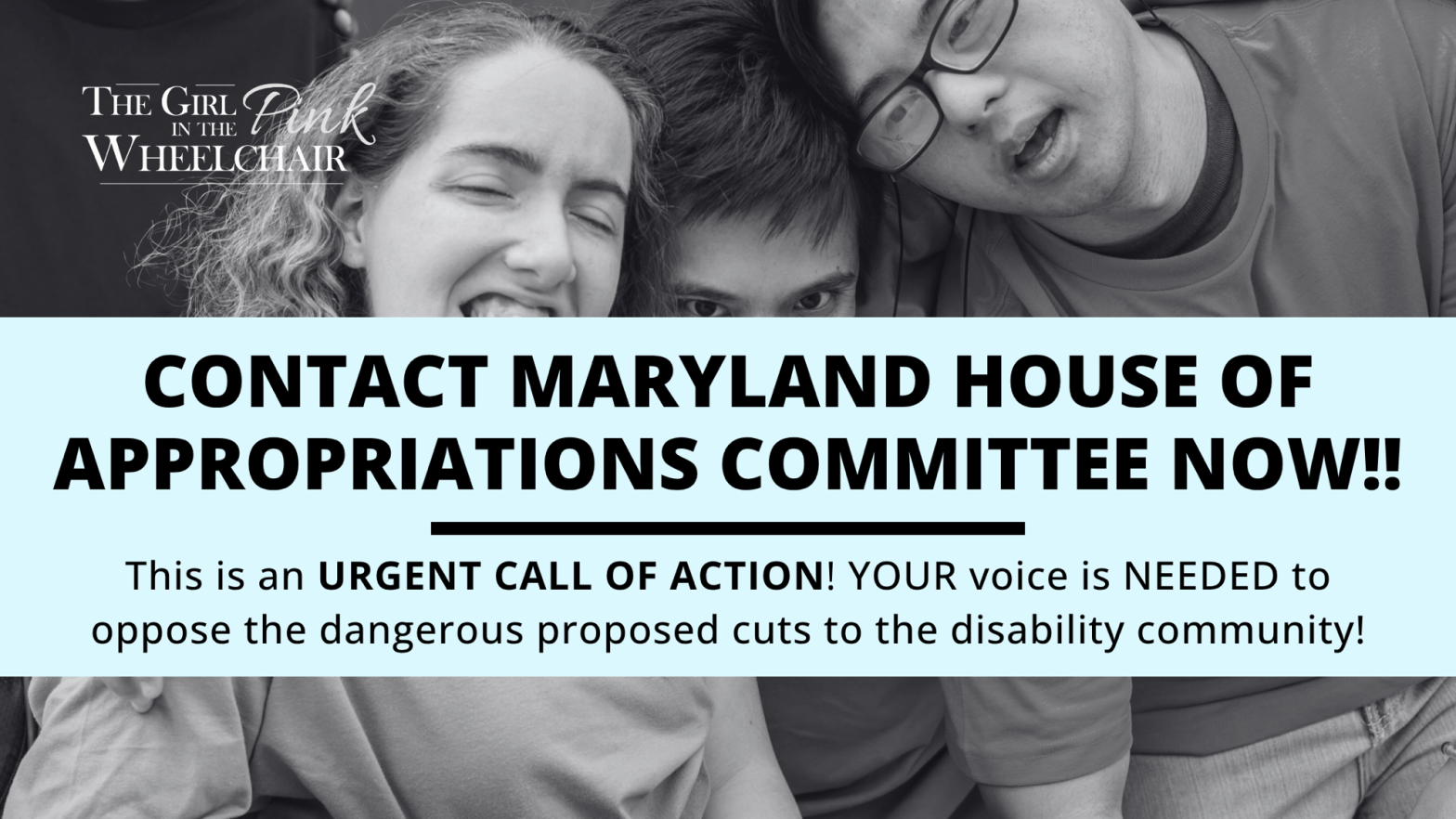
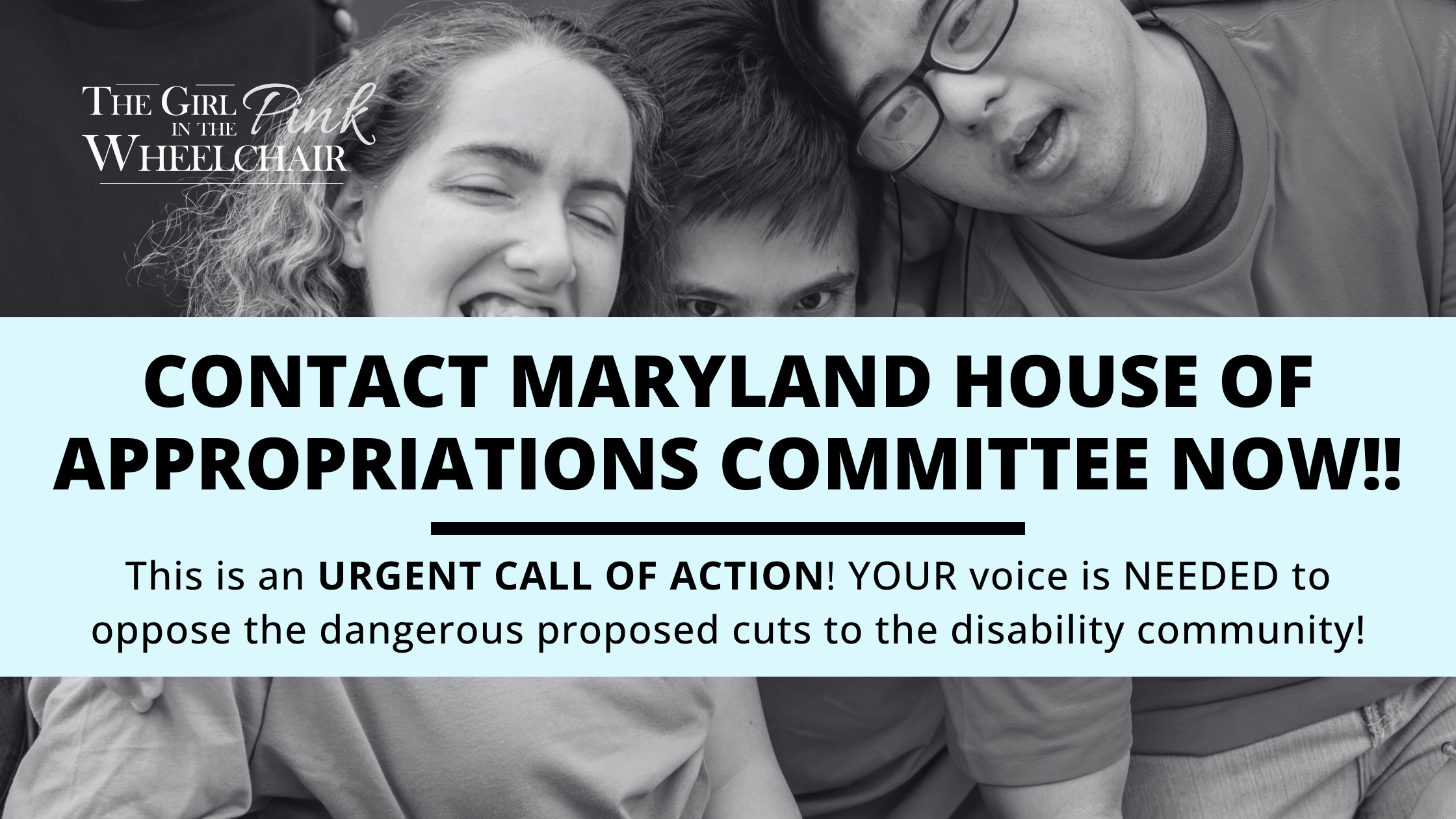
Below you will find a link of state elected officials and state leadership to contact. You can click the links or scan the QR codes in the post. You will also find a copy and paste version of the House of Appropriations Committee.
There is also letter templates for you to use to write to state delegates!
I will also be sharing this information on a social media post!
If this format is not accessible, please email me at DomTheAdvocate@gmail.com or connect with me via social media or my site’s Contact Form!
Resources to Advocate Against DDA Cuts:
Find Your Maryland Representatives (if you don’t know your delegate)
Today, Friday March 20th 2026, the House Appropriations will take a vote on the DDA Budget.
It is CRITICAL for you to use YOUR voice right now to tell the Appropriations Committee that you do NOT support these cuts!
Governor Moore’s 2027 proposed budget CUTS $127 MILLION DOLLARS from the Developmental Disabilities Administration (DDA).
If it passes through the Maryland Assembly:
The TOTAL cut will be $254 DOLARS! Federal funds match state funds 50%.
The Senate has already voted YES on this dangerous budget. An amendment was rejected, unfortunately, at the voting session on the Budget Floor Session which would’ve granted more dignity and opportunity for people receiving services.
These numbers represent real lives. They are not numbers on a spreadsheet, but real people. These “cost containment efforts” represent people with disabilities. These cuts will harm them, especially those with high support needs.
The Governor’s proposed budget requires the legislature to approve it. .
Many don’t realize how dangerous these cuts will be for the 20,000+ individuals receiving DDA services. Individuals who are the MOST vulnerable in our state will be affected!
DDA is a state agency that provides services, support, and resources for people of all ages with intellectual and developmental disabilities (I/DD).
It allows individuals to live the life that they choose with the services and support that it provides. This allows them the ability to live healthy and independent lives!
They are many types of intellectual and developmental disabilities (I/DD)! Some examples are Down Syndrome, cerebral palsy, autism, and conditions requiring 24/7 care.
It’s a broad term, just like disability is!
Maryland defines it as a severe, chronic disability that’s likely to last forever and happened before the age of 22. As a result, independent living isn’t possible without help, continued support, and other services.
These supports and services prevent individuals from being placed in institutions, improve quality of life, guarantee safety, and provide a way to choose the care that they need — and want!
DDA services are critical for individuals to live the life they want, have choices, stay at home, and be a part of their community.
DDA offers two models for individuals to do this: self-direct services (SDS) and provider managed services.
When you choose to self-direct your services, you take responsibility for hiring staff, developing your budget, and other responsibilities.
Provider managed services also support an individual’s care and needs. A person chooses a DDA approved agency. The provider handles hiring staff, the budget, and other responsibilities.
Both models allow people with disabilities to live with dignity!
BOTH models are facing HUGE budget cuts!
WHAT ARE THE CUTS PROPOSED?
- Dedicated Hours
- Wages
One of the proposals was removed. It was a $500,000 cap on the annual state funding an individual can receive. This has taken the budget cut to $150 million to $127 million. I’m thankful to the Senate for restoring this funding and removing this proposal.
However, they also have added a new cost containment proposal to wages and the breakdowns are more detailed than what is listed here. This is a brief high level synopsis.
DEDICATED HOURS:
- Dedicated hours are hours for an individual who requires a higher level of care in a provider-managed home. It allows them to get 1:1 or 2:1 staff care. An example of a provider-managed home is a Community Group Home where multiple people with I/DD live together.
The cut will limit those staff hours by requiring training and changing the policy that has existed.
It’s unclear what the new policy will be. This is scary for people who cannot live without it!
Providers and Coordinators of Community Services (CCS) would also require training on how and when hours are used. A CCS is a professional who helps people with I/DD with their services, their plan, and coordinates support.
People Affected: 3,800 and 200+ providers
This affects ONLY the provider managed model.
WAGES:
- Individuals who self-direct can hire staff and pay them the wages they want based on their budgets and within state guidelines. They are the decision makers.
The cut will bring MAJOR changes to staff employed by individuals who choose SDS.
Self-directed staff wages will have a HUGE reduction of 30%. Last year, they already experienced big cuts in pay with budget cuts.
They want to replace the current wage system by basing it on the Bureau of Labor Statistics (BLS). Little information is available about these pay rate changes.
This proposal does NOT factor in the intense workload, existing shortage, and training that staff have. Staff who work these jobs are direct support professionals (DSP).
Many people who work in the direct support professional field are women, immigrants, or people of color. This will severely affect their lives.
They love their jobs and want to keep them. The same way that people want to keep the staff that they love and know!
Staff members deserve a livable wage! There are often few benefits involved for people who work as caregivers in the SDS field.
The tasks that staff perform are NOT things that just anyone can do. Each individual has unique needs that staff must understand. Often, individuals who have extremely complex medical or behavioral needs will choose SDS.
The cut will ELIMINATE wage exceptions. A wage exception allows a staff member to get a higher level of pay that.
It’s NOT EASY to get a wage exception, and there MUST be a justified cause.
Some reasons for it include: being in a rural area, specialized training, the intensity of the support needed, or staff certifications. These are just a few examples!
These pay cuts and elimination of the wage exception will lead to MASSIVE staff shortages.
Not only does it affect staff, but it affects the individuals.
Without staff, they can end up in an institution. They depend on their staff to live independently! The purpose of self-directed is to allow people with I/DD to be decision makers. None of these decisions on wages take this into account.
People Affected: 4,000+
This affects ONLY the self-directed model.
A cost containment that they added is:
. Family as Staff (FAS) will be caped at 40 hours a week and 60 hours total
That means IF two parents or two siblings, as an example, care for someone with I/DD:
One can earn 40 hours a week and the other can only earn 20 hours a week..
It’s important to remember that many family members often put in dedicated 24/7 care for their loved one. The current policy is that they’re only able to receive pay for 40 hours per week.
When a DSP can’t work from being sick or cancelling: a family member often fills this spot for free.
It can also be hard to find DSPs that have experience when it comes to complex medical conditions. This is especially true for rural regions.
Family provides reliable, thoughtful, and loving care. They understand the unique needs of their family member with a disability! This is especially true for individuals with complex medical conditions!
What are some important things I can do to advocate against these cuts?
- Email and call the Maryland House Appropriations Committee NOW! Use my template for email on my site! You can find their contact information on the bottom at this post as well as my DDA Legislators Contact List on Google Sheet.
- Use my contact list to let our state leadership and elected officials know why you don’t support it. Not sure what to write? I have templates you can use for emailing. They’re linked at the top.
- Email and call the Maryland House Speaker as well as YOUR delegate to ask them to vote NO on the DDA cuts!
- Speaking up is vital right now with the upcoming budget vote. Email and call as many as you can! It’s absolutely CRUCIAL to speak up NOW!
What else can I do to help?
- Beyond emailing and calling, it’s important to ask people you know to reach out! Ask your friends, family, and networks to reach out!
- Another important way to help is to SHARE this information! The Maryland Developmental Disabilities Council, The Arc Maryland, and Self-Directed Advocacy Network Of Maryland (SDAN) all have resources for you to use!
- Please share this post and my social media posts on Facebook and Instagram! The more people who are aware, the better!
After fighting against a massive budget cut last year, I know how upsetting it is to advocate again. Advocates are tired and exhausted.
That’s why we need everyone to use their voices again to ensure these cuts do NOT pass! These cuts affect 20K Marylanders, but they affect so much more than that. They affect employers, agencies, and people you know and love!
Disability rights ARE human rights!
The lives, health, and independence of individuals with I/DD are in jeopardy. Individuals are at SEVERE risk with these cuts!
Maryland must REMAIN a leader in disability rights!
Marylanders with intellectual and developmental disabilities are depending on people like YOU to speak up!
Please help make sure the House of Delegates does not accept the Senate bill.
PLEASE TAKE ACTION NOW TO PROTECT THE MOST VULNERABLE!
| Contact Entire Committee: aa_app@mga.maryland.gov 410-841-3407 |
 The Girl in The Pink Wheelchair